Defender of the Crown The Legend Returns Retro Mode: the 1986 campaign
Rebuilt, localised, and still willing to end a duel without a speech.
Retro Mode is the disc you buy if the sentence “I want Defender of the Crown” means the Amiga one. Black Tower Basement did not drop an emulator into a menu. Naumenko was explicit: they recreated the game from sources so it could be localised and so a controller would work. That is why Retro exists as a mode instead of a ROM pack. It is also why the old problems still exist. Faithfulness was the brief.
What you actually get
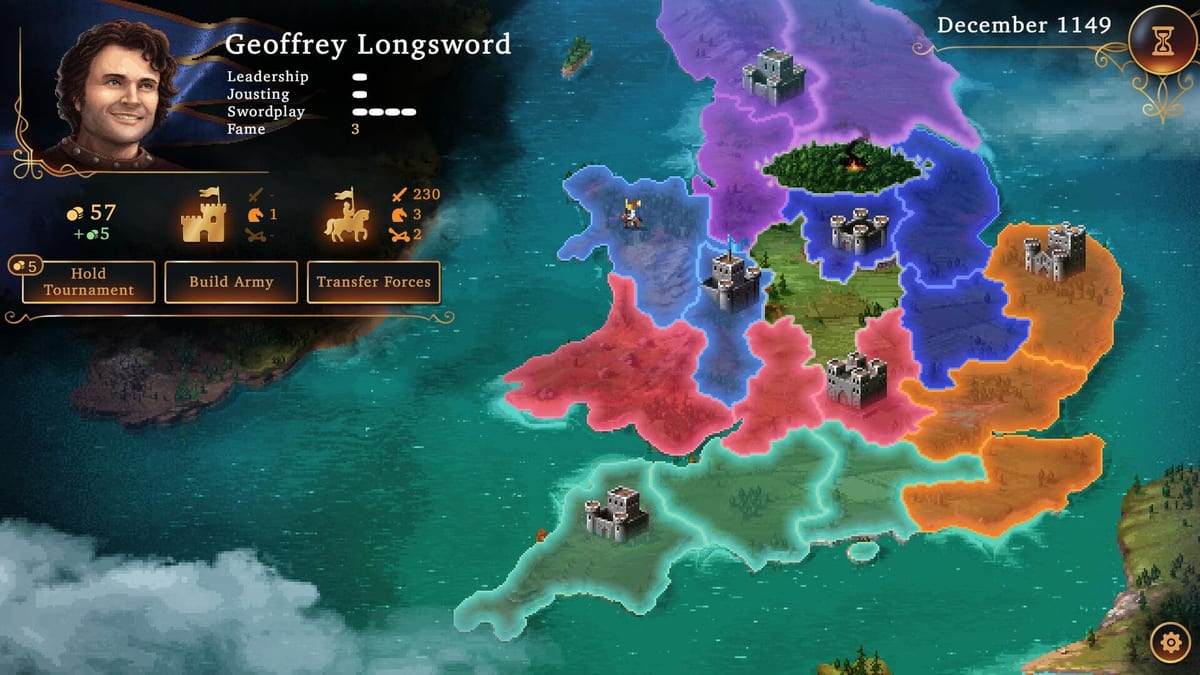
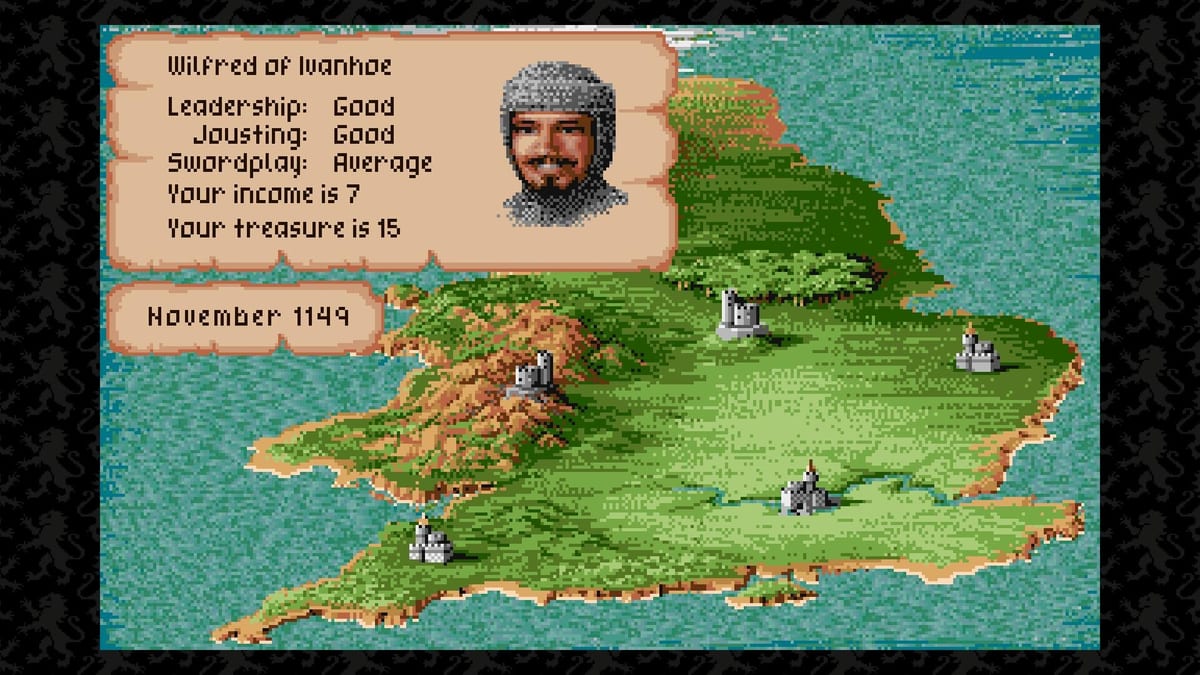
You get the 1986 campaign structure: a pixel map of England, parchment portraits, income and treasure as small numbers, and minigames that interrupt the month. Wilfred of Ivanhoe’s Retro sheet still reads Leadership Good, Jousting Good, Swordplay Average, with income and treasure in the teens at the start of a sample November 1149. The lion-rampant border is not a filter. It is the frame.
You also get the original soundtrack where Retro historically had it — title, opening, tournament stings — rather than a wall-to-wall 2026 score. Official FAQ language says the original music is featured and that Retro preserves the 1986 experience. Believe that when the field goes quiet.
Quality-of-life exists at the edges: a gamepad can drive the menus, languages beyond English can appear, and you are not fighting a CRT. The ruleset, pacing, and atmosphere were the parts they refused to “fix.” If you want the HUD, the action wheel, and skippable turns, that is Classic Mode. If you want dice that explain themselves, that is Kingdom Mode.
The minigames you must relearn
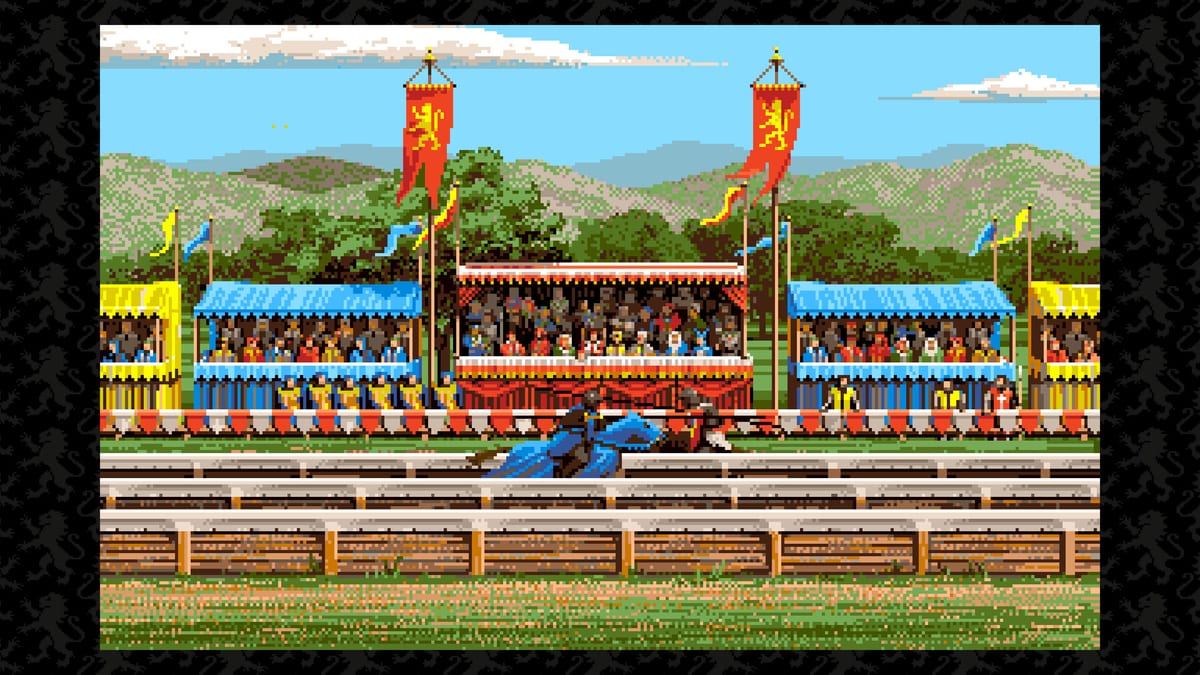
Retro duels can end without a health bar speech. Retro jousts tell you to aim and then withhold the unseating. Retro catapults ask for force by feel. Those are not bugs introduced in 2026. They are the museum. Use the modern guides anyway — How to Joust still tells you to aim at the rider, How to Siege still tells you to bring catapults, How to Duel and Raid still tells you to keep the attempt cheap — then accept that Retro will grade you in private.
Who should press this tile
Press Retro if you remember the disk, if you want to show someone the cinematic strategy that sold Amigas, or if Classic’s extra munitions feel like cheating on a memory. Do not press Retro as a first hour if you have never seen a Cinemaware logo. The Getting Started page will try to stop you. Let it.
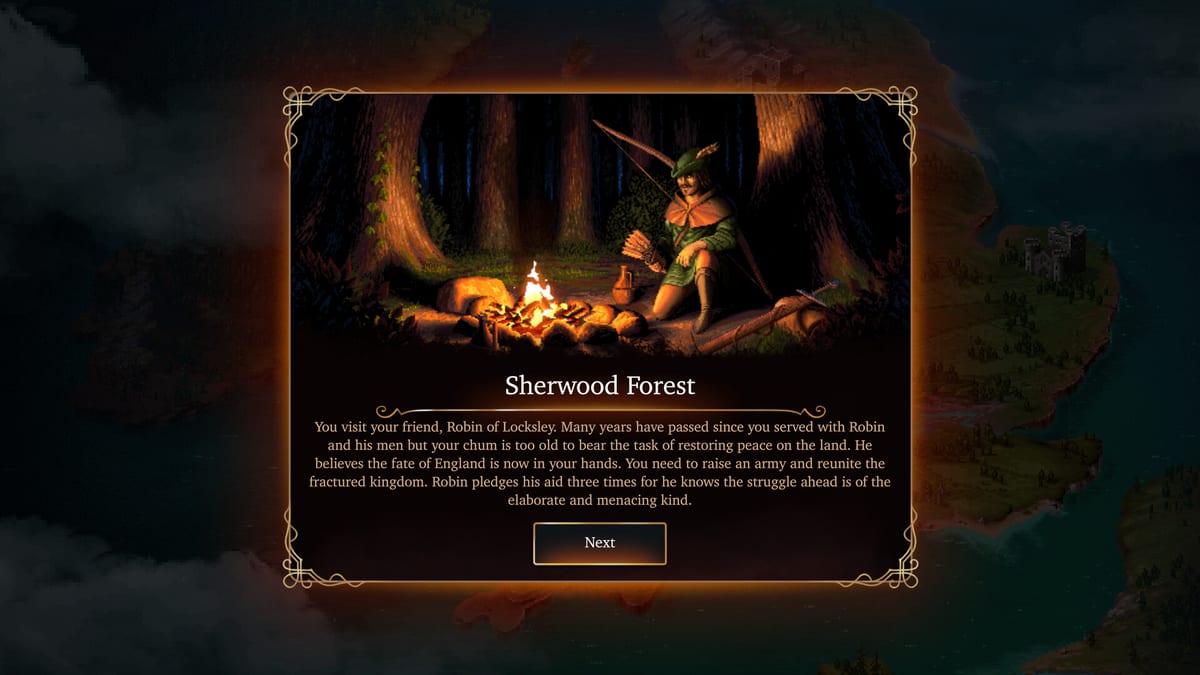
A practical Retro session still follows the political clock in the campaign walkthrough. Saxon courtesy is not a 2026 invention; the first Norman castle still rearranges the map. Catapults still matter. Robin’s pledges, when they appear, are still scarce. The difference is the amount of coaching between those facts and your thumbs.
If Retro feels brutal in a way that is not fun, that is information, not a failed purchase. The package already contains two other answers. Switch. The crown will still be there. The 1986 campaign will still be there when you want the silence back.
For hardware notes, Retro is the lightest visual load of the three and still wants a controller you like. See controls. For a launch-week opinion on whether Retro alone justifies the price, the review is the page that says Kingdom is doing the commercial lifting.
Frequently Asked Questions
Quick answers drawn from official notes and launch play.
Is Retro Mode an emulator?
No. The developers rebuilt it from sources so localisation and controllers could exist.
Does Retro include modern duel meters?
No. Visible meters and extra siege munitions are Classic. Retro keeps the older feedback.
Should beginners start in Retro?
Is the original music in Retro?
Yes. Official notes say Retro preserves the 1986 experience, including original music where that campaign used it.